

Your customer service team is incredible. They are empathetic, solve complex problems, and know your product inside out. But how much time do they spend each day answering the same three questions over and over again?: “What are your hours?”, “Do you ship to my city?”, “How do I reset my password?”.
Imagine having a new team member. Someone who works 24/7, never gets tired, responds instantly, and knows all the frequently asked questions by heart. This star employee would free up your human team to focus on what truly adds value: complex conversations, important sales, and building lasting relationships.
That employee is a well-implemented chatbot. And the fear of it sounding “robotic” is the main myth we're going to debunk today.
What is a Chatbot (and what is it NOT)?
A chatbot is simply a computer program designed to simulate a human conversation through text or voice.
It is nota cold, soulless robot that will replace your team. Yes it isa first-line assistant, an intelligent filter that manages the repetitive so your agents can shine in the exceptional.
Think of it like a hotel receptionist. It welcomes you, answers basic questions about Wi-Fi or breakfast, and if you have a more complex issue, it immediately directs you to the manager.
The Two Types of Chatbots You Need to Know
Not all chatbots are the same. Broadly speaking, they are divided into two families:
- Rule-Based (or Flow) Chatbots:
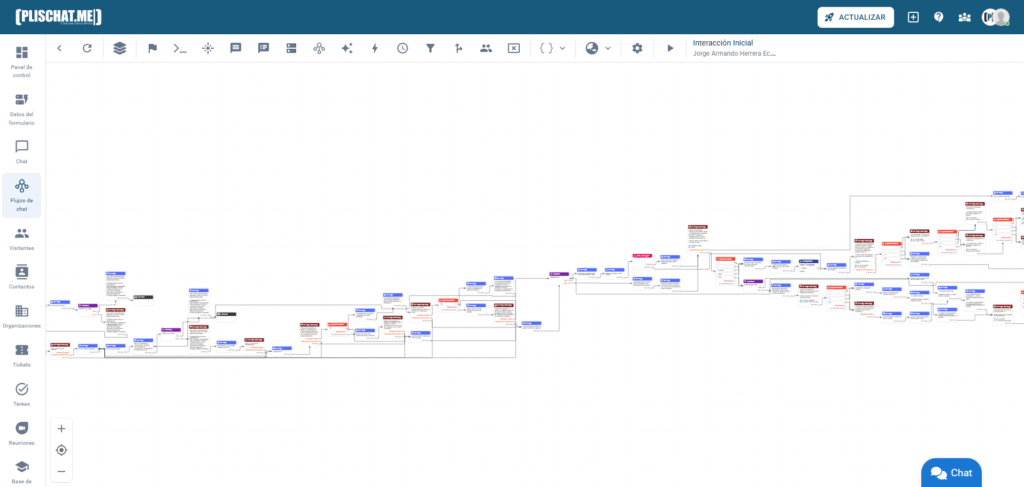
- How do they work?They follow a predefined script, like a decision tree. They offer the user buttons and options to guide the conversation. (“For Sales, press 1. For Support, press 2”).
- Ideal for:Very specific tasks like scheduling an appointment, answering a closed set of frequently asked questions, or guiding a user through a simple process.
- Chatbots with Artificial Intelligence (AI):
- How do they work?They use natural language processing (NLP) to understand user intent, even if they write with errors or colloquially. They learn from interactions to improve their responses.
- Ideal for:Offer a more conversational and open experience, manage a wider range of questions, and understand the context of the conversation.
The Secret to Not Sounding Robotic: The Perfect Balance
Here's the key many companies forget: a good chatbot doesn't try to trick the user into believing it's human. A good chatbot is helpful, efficient, and most importantly, knows when to step aside.
- Give it a Personality:It doesn't have to be Shakespeare, but give it a name and a tone of voice consistent with your brand. A simple "Hello! I'm PlisBot, your virtual assistant. How can I help you?" is much warmer than silence.
- Be Honest and Transparent:It's better to say “I am a virtual assistant” than to frustrate a user trying to have a complex conversation with a rule-based bot. Honesty builds trust.
- The Golden Rule: Always Offer a Human Exit:This is the key to everything. At any point in the conversation, the user must have a clear button or option to "Talk to an agent." A chatbot that traps the user in an infinite loop is a recipe for disaster. The transition must be fluid and frictionless.
Start Automating Today, Humanize Tomorrow
Automation isn't a threat to quality customer care; it's its greatest ally. By delegating low-value tasks to a chatbot, you not only improve your response time to seconds, but you empower your team to offer a more profound, personalized, and human service than ever before.
A chatbot answers the question. A human agent solves the problem and builds the relationship. You need both.
Ready to create your first chatbot without writing a single line of code? With Plis Chat Me, you can design intelligent conversational flows and ensure your customers can always talk to a human when they need to. Automate the repetitive, humanize the exceptional. Start your free trial today!
